
By SK Winnicki
Related paper: Laying order predicts avian maternal investment in egg yolk hormones and nutrients but not embryo size in the asynchronously hatching Turdus migratorius (American Robin) by Sarah K. Winnicki, Thomas J. Benson, Ryan T. Paitz, Kevin J. McGraw, Mark E. Hauber. Ornithology.
Are you a responsible first-born child, a peacekeeper middle child, or a free-spirited youngest child? You may roll your eyes at these birth order stereotypes for humans, but there might be more truth to order effects in Turdus migratorius (American Robin) bird families. Our research, now published in Ornithology, revealed that the resources available to developing robins are dependent on the order in which their eggs were laid. The overall size of the egg, the size of the egg yolk, the concentrations of steroid hormones, vitamins, and carotenoids in the yolk, and even the color of the eggshell all vary among the first-, second-, third-, and fourth-laid eggs.
For centuries, ornithologists have noticed that not every egg is made equal. Some species produce higher-quality first-laid eggs, producing a larger, dominant oldest sibling. Others make their last-laid egg the highest quality, allowing the latest-hatched baby to catch up. The allocation of contents to each egg is often context-dependent. If food is plentiful, birds may lay equally equipped eggs that all survive. However, if food is limited, they may instead stack the deck to favor some offspring over the others. The resources in the egg can be allocated independently of other contents; one egg may be smaller than the others but contain higher concentrations of nutrients for the developing bird. Because some resources may be more limited than others, like carotenoids derived from the parent’s diet, other less-costly resources may compensate. Variation in egg resources can be a flexible way to manipulate sibling conflict, compensate for unpredictable environmental conditions, and produce the next generation of healthy birds.
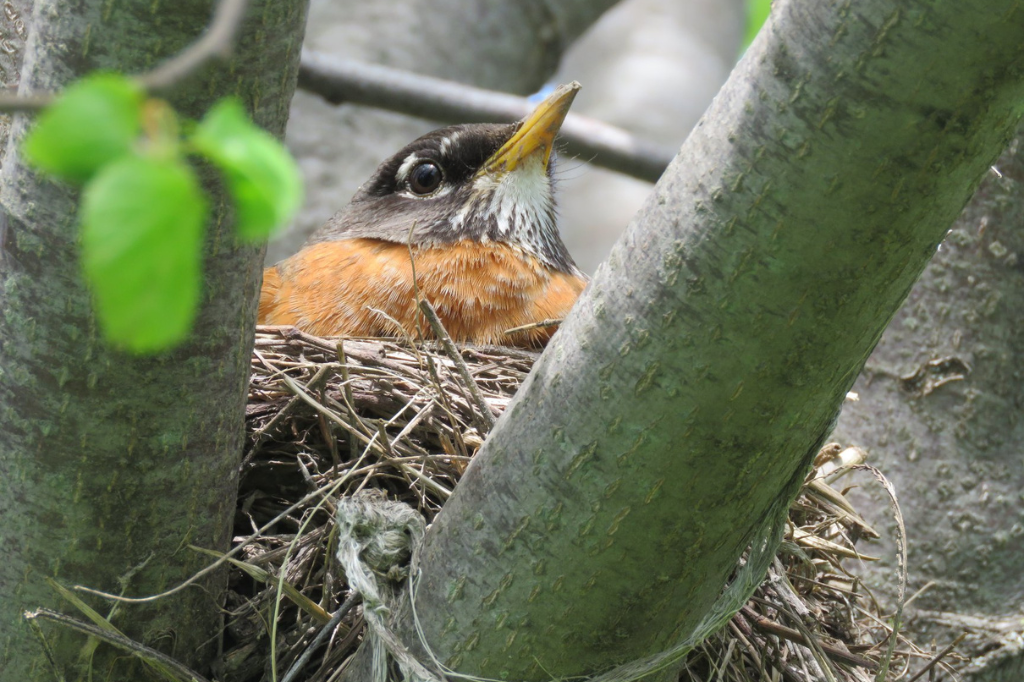
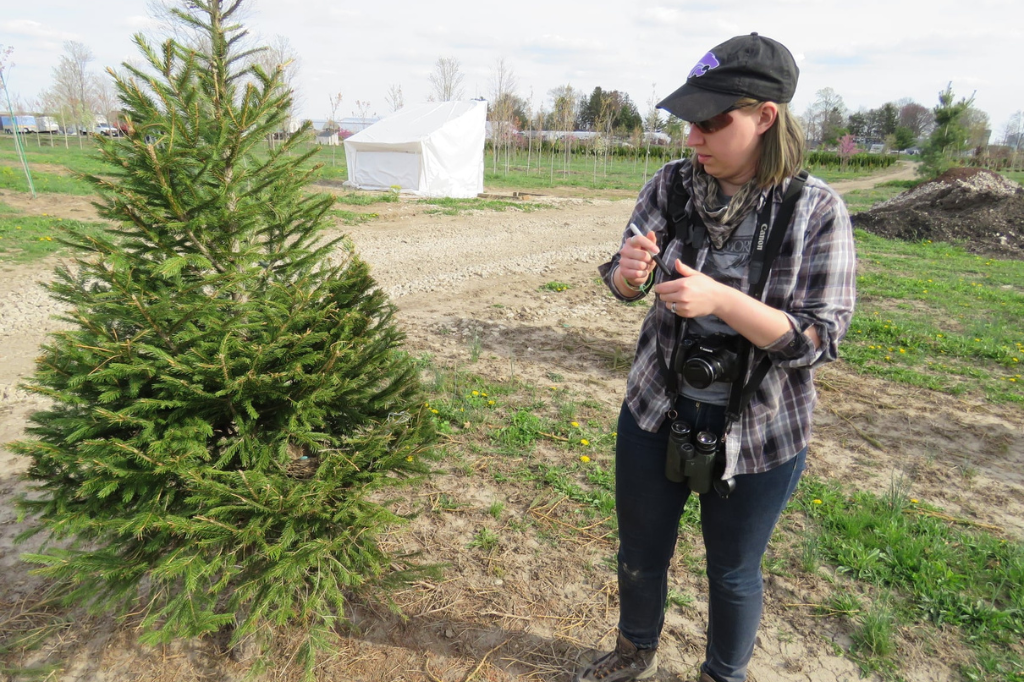
I became interested in eggs while studying grassland songbird growth. Their growth rates were influenced by predation risk. When I defended my thesis for my master’s degree, the biggest remaining question was: How? How did the babies grow faster in riskier areas? One possible explanation was variation in egg contents. But as I reviewed previous studies, I was struck by the complexity of eggs and decided to pursue more fundamental questions for my next research projects. Which egg contents vary among siblings? Is that variation dependent on environmental and social context? Does it actually impact the growth of baby songbirds?
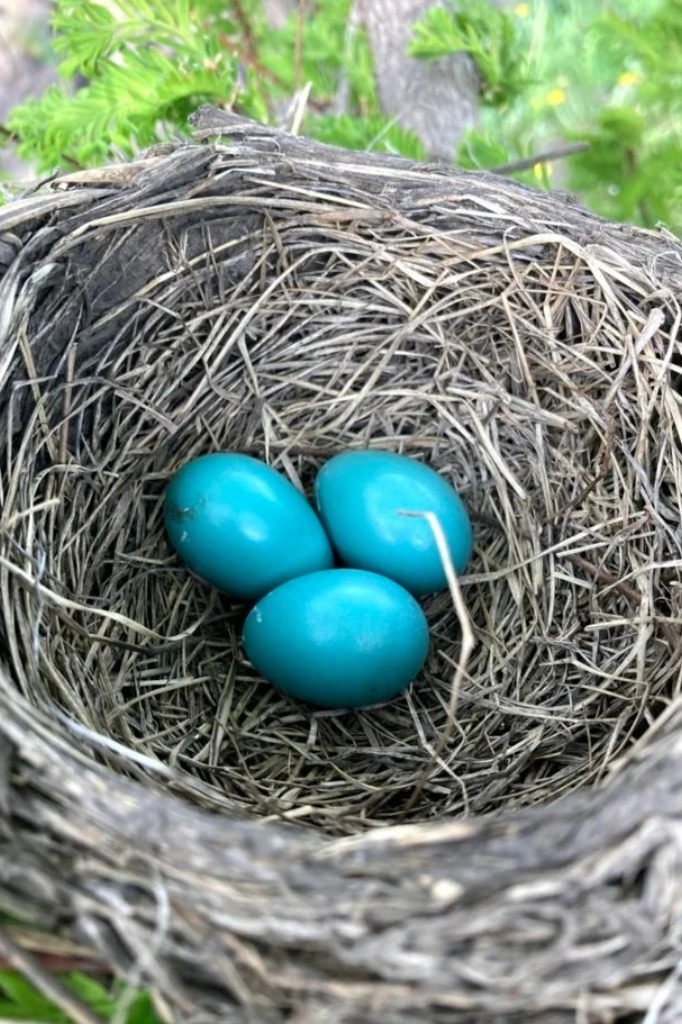
While most studies of songbird eggs rely on species in nest boxes, the majority of songbird species do not nest in cavities. Therefore, I teamed up with Drs. T.J. Benson, Ryan Paitz, Kevin McGraw, and Mark Hauber to study robins, with their accessible open-cup nests. In commercial tree farms in Illinois (U.S.), we found 77 nests before they had laid their second egg. This allowed us to know the order in which each egg was laid and to assess them before incubation had started. We quantified egg size, yolk and albumen (egg white) size, eggshell color, and the concentrations of twelve steroid hormones and ten yolk carotenoids/vitamins in the yolk. To the best of our knowledge, ours is the first study to assess all of these egg resources simultaneously. To look for context-dependent effects, we did this twice during the season: in the early half, when the wet soil provides plentiful worms for the robins to eat, and in the later half, when the dry mud requires robins to switch to eating other food sources.
Across both halves of the breeding season, first-laid eggs were smallest overall, with the palest eggshells and highest concentrations of some yolk steroids. Second-laid eggs had the largest yolks. In the early season, the last-laid eggs had lower concentrations of some yolk carotenoids/vitamins. In the latter half of the year, all eggs had brighter eggshells and higher concentrations of some yolk carotenoids/vitamins. In other words, robin eggs are not made equally and these laying-order effects are context-dependent; the robins may respond to changes in resource availability by altering the strategy used to build their families.
Does the consistent variation in egg content change the growth of the robin babies inside those eggs? Do robins have responsible firstborns or risk-taking youngest nestlings? We incubated an additional cohort of eggs and found no impact of laying order on embryonic growth. However, keep an eye out for our upcoming paper on post-hatch growth in robins to see the conclusion of these studies!