The American Ornithological Society (AOS) annually recognizes individuals and groups whose ornithological research, contributions to the science and practice of ornithology, and service to the AOS merit special distinction. This year’s award recipients exemplify that commitment, advancing both the scientific study and conservation of birds and the AOS mission. The 2026 recipients will accept their awards at the AOS annual meeting (AOS 2026) in Amherst, Massachusetts, USA, in August.
AOS Executive Director and CEO Judith Scarl reflects on the importance of acknowledging the important work these awardees have been doing, stating, “At a time when science is under attack, it is especially important to recognize meaningful science that advances the understanding and conservation of birds, and to recognize researchers whose creative work, careful implementation, and strong ethical standards guide the field of ornithology and demonstrate the integrity and the significance of science. Research is not done in a vacuum; it requires partnership, funding, education, and community.” Scarl continues, “We also celebrate incredible service to the AOS that ensures that our members get the support they need to produce such impressive science. The AOS is so fortunate that our service award winners have chosen the AOS as their ‘home society’ and devote so much of their passion to supporting others in their field.”
Senior Professional Awards
The AOS annually bestows three prestigious awards in recognition of outstanding contributions to ornithological science: the William Brewster Memorial Award, the Elliott Coues Award, and the Loye and Alden Miller Research Award.
William Brewster Memorial Award
The William Brewster Memorial Award is given each year to the author or coauthors of the most meritorious body of work (book, monograph, or series of related papers) on birds of the Western Hemisphere published during the past ten years. The AOS bestowed two 2026 Brewster Awards: one to Daniel Cadena and one to Kimberly Rosvall.
Daniel Cadena, Ph.D., Full Professor and Dean, Departamento de Ciencias Biológicas, Universidad de los Andes
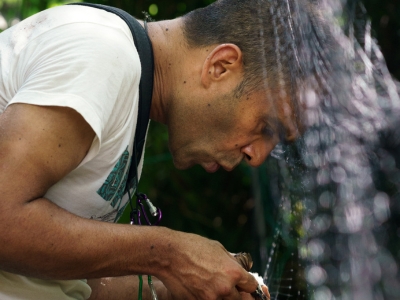
Daniel Cadena, Ph.D., is a full professor in Departamento de Ciencias Biológicas and Dean of the School of Sciences at Universidad de los Andes, Bogotá, Colombia, where he has been a faculty member since 2006. He has been actively involved in the AOS throughout his career. Beginning as a graduate student, he contributed Spanish translations of abstracts for AOS journals for more than a decade. He later served as an Elective Councilor (2020–2023), was a long-standing member of the South American Classification Committee, co-chaired the Ad Hoc English Bird Names Committee, and contributed to the development of the current AOS Strategic Plan. His editorial service includes roles as a reviewing editor for Ornithological Applications (formerly The Condor) and as an associate editor for Ornithology (formerly The Auk).
His research focuses on speciation, biogeography, and migration in Neotropical vertebrates. He has published more than 130 papers in leading journals and has supervised more than 80 graduate and undergraduate students. He received the TWAS Award for Young Scientists, the Dejar Huella Award at Universidad de los Andes, and an honorable mention for the Humboldt–Caldas Medal in Biogeography from the Colombian National Academy of Sciences and the Embassy of Germany. He previously won an American Ornithologists’ Union (AOU) Marcia Brady Tucker Travel Award (2005); a VI North American Ornithological Conference (NAOC) Travel Award and Student Presentation Award for an outstanding student presentation (2006).
Cadena earned his Ph.D. in 2006 from the University of Missouri–St. Louis. He has been a member of the AOS—including AOU and the Cooper Ornithological Society*—since the late 1990s; is an AOS Elective Member (2008); and an AOS Fellow (2016). Cadena combines his passion for the outdoors with his activities as an accomplished endurance athlete; he enjoys pushing his own limits as a marathoner, trail runner, and long-distance triathlete.
Follow Dr. Cadena’s research: Google Scholar
*Note: In 2016, the AOU and COS merged to form the AOS.
Kimberly Rosvall, Ph.D., Associate Professor of Biology, Indiana University
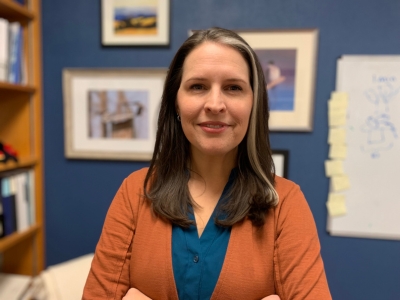
Kimberly Rosvall, Ph.D., is a behavioral ecologist and tenured associate professor at Indiana University who integrates physiological mechanisms and evolutionary frameworks to understand how animals solve problems in their environment. For over two decades, she has studied free-living Tree Swallows (Tachycineta bicolor), combining long-term field research with molecular and neuroendocrine tools. Her work on T. bicolor and their aggressive interactions over nesting territories has changed our understanding of female competition, including its adaptive value, prevalence, and unique neurogenomic regulation. This is Rosvall’s first AOS award.
Rosvall earned her B.S. from the University of California, Los Angeles and her Ph.D. from Duke University. She especially loves big experiments that combine muddy-boots field biology with molecular techniques, to understand both ecological and evolutionary processes shaping trait variation in birds.
Follow Dr. Rosvall’s research: Google Scholar
Elliott Coues Award
The Elliott Coues Award recognizes outstanding and innovative contributions to ornithological research with no limitation to geographic area, sub-discipline(s) of ornithology, or the time course over which the work was done. The AOS is bestowing two 2026 Elliott Coues Awards; one to Rebecca Jo Safran and another to J. Albert C. Uy.
Rebecca Jo Safran, Ph.D., Professor of Ecology and Evolutionary Biology, University of Colorado, Boulder
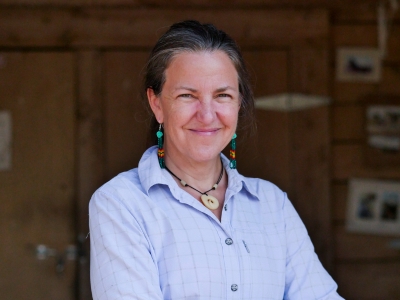
Rebecca Jo Safran, Ph.D., is a professor of ecology and evolutionary biology at the University of Colorado where her research group focuses on the evolution and maintenance of population differentiation using ecological, genomics, and behavioral studies. For this work, she and her team have traveled across the world to study Barn Swallows (Hirundo rustica) and have conducted comparative analyses on other avian groups.
Safran earned her Ph.D. at Cornell University followed by a postdoctoral fellowship at Princeton University. She and her team established their research lab at the University of Colorado in 2008 where Safran’s teaching is focused on speciation and science communication. Safran is the founding co-director of Inside the Greenhouse, whose mission is to adapt creative ways to communicate the science of climate change. She is passionate about the evolution and conservation of wild bird populations, interdisciplinary collaboration, art-science connections, issues related to belonging in STEM, natural history, and providing learning opportunities for students at all stages of their education.
Safran is an AOS Elective Member (2011) and is honored to be an elected board member of Environment for the Americas and the Colorado Environmental Film Festival. She is an elected Fellow of the AOS (2016) and the American Association for the Advancement of Science. Safran previously received AOU Travel Grants (1999; 2003); and an AOU Research Grant (2001). This support was key for Safran’s research and conference participation during graduate school. Safran wishes to acknowledge that her work is not possible without the incredible collaboration of students and colleagues and through funding by several entities including the AOS and National Science Foundation. Wherever she goes (and sometimes to the dismay of others walking with her), she is always on the lookout for H. rustica and their mud cup nests.
Follow Dr. Safran’s research: Google Scholar
J. Albert C. Uy, Ph.D., Dean’s Professor of Biology, Department of Biology, University of Rochester
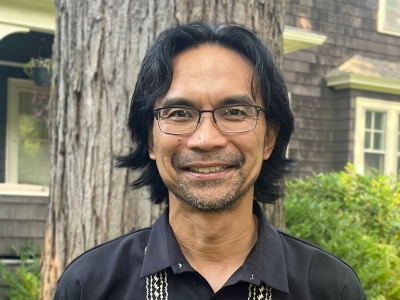
J. Albert C. Uy, Ph.D., is the Dean’s Professor of Biology and Chair of Biology at the University of Rochester. Over the past two decades, Uy and his team have explored the origin of species, combining genomic approaches with field data to uncover the molecular basis of reproductive isolation—finding, for example, that simple mutations underlie premating barriers. Their projects include work on Darwin’s finches of Galápagos, seedeaters, tanagers and hummingbirds of the Neotropics, and honeyeaters and flycatchers of the Solomon Islands. Uy also partners with indigenous communities to establish conservation areas, culminating this year in the declaration of the Yato Protected Area—the largest protected forest in the Solomons. His work in the Solomons was featured in a documentary, “Islands of Creation,” broadcasted by the Smithsonian Channel and now streaming on Paramount+.
Uy received his A.B. in Integrative Biology from the University of California, Berkeley, and his Ph.D. from the University of Maryland. For his Ph.D., Uy worked on bowerbirds of Australia and New Guinea to explore the operation of sexual selection and its role in speciation. He then worked on signal evolution in Neotropical manakins for his postdoctoral research. Uy continued as a postdoc at University of California, Santa Barbara, and held faculty positions at San Francisco State University, Syracuse University, and University of Miami, where he served as the Aresty Chair in Tropical Ecology. Uy is an AOS Elective Member (2016) and an AOS Fellow (2022). This is his first AOS award. Uy enjoys creating art, with his line drawings making the cover of the journal Evolution and featured in an article in American Scientist.
Follow Dr. Uy’s research: ORCID
Loye and Alden Miller Research Award
The AOS Loye and Alden Miller Research Award recognizes lifetime achievements in ornithological research. The AOS has selected Charles F. Thompson as the 2026 AOS Loye and Alden Miller Research Award winner.
Charles F. Thompson, Ph.D., Research Professor, Illinois State University
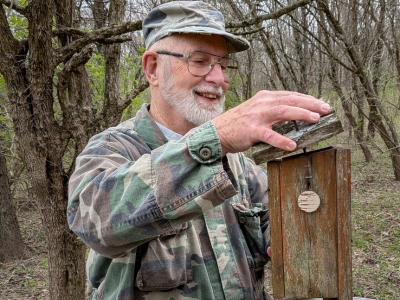
Charles F. Thompson, Ph.D., is a research professor at Illinois State University whose research focuses on behavioral ecology, with student- and colleague-inspired excursions into parasitology, immunology, and endocrinology. He grew up in the 1950s near Dayton, Ohio. During high school he spent two summers in the mountains of North Carolina at Camps Sequoyah and Tsali, where he decided to become an ecologist who would study birds. To accomplish that goal and to see the wider world described in books, he enlisted in the U.S. Air Force immediately after his graduation from high school. The Air Force surprised him by sending him to Russian language school at Indiana University and then to further training in the tradecraft of intelligence. Following a tour of duty in West Germany, he was assigned to a remote island in the Bering Sea, where he spent his spare time traveling with the local Yupik and studying the island’s bird life, which led to his first publications in 1965 and 1967.
After leaving the Air Force in 1965, Thompson returned to Indiana University, where he earned his B.A. (1967), M.A. (1970), and Ph.D. (1971) in zoology under the direction of Val Nolan Jr. He then became a research postdoc at the University of Georgia, followed by a teaching postdoc at Miami University (Ohio), and eventually an assistant professor at the State University of New York (SUNY), Geneseo. After three years at Geneseo, he moved to Illinois State University in 1978.
Thompson and his wife, Karen, have had the good fortune of enjoying three, year-long sabbaticals, the first split between New Zealand and Oxford, England, and the others in Oxford and Glasgow, Scotland. Thompson is an AOS Elective Member (1979) and Fellow (1995). This is his first AOS award.
Follow Dr. Thompson’s research: Google Scholar
Service Awards
The AOS annually offers two awards, the Peter R. Stettenheim Service Award and the Marion Jenkinson Service Award, to recognize AOS members who have provided continued, exceptional service to ornithology and to the society. This year, the AOS bestows Peter R. Stettenheim Service Awards to R. Terry Chesser and Patricia J. Heglund; and Marion Jenkinson Service Awards to Nancy Chen and Dai Shizuka for their dedicated service to the AOS.
Peter R. Stettenheim Service Award
R. Terry Chesser, Ph.D., Research Associate, Smithsonian; Emeritus Scientist, U.S. Geological Survey
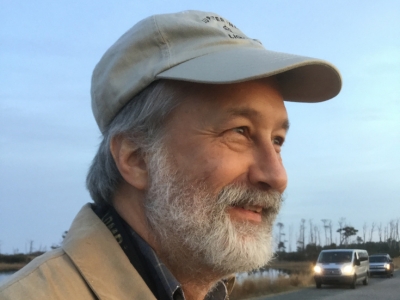
R. Terry Chesser, Ph.D., is a research associate at the Smithsonian Institution’s National Museum of Natural History and Emeritus Scientist with the U.S. Geological Survey (USGS) Eastern Ecological Science Center. His research career has focused on avian systematics, and his most significant service contributions center on this field.
After editing the Neotropical section of recent ornithological literature as a graduate student and postdoc, and later serving on several AOU committees, including the Committee on Classification and Nomenclature for North and Middle America (NACC), Chesser stepped into his influential role as chair of the NACC in 2008. He continues to serve as chair, having written 17 annual supplements to the Check-list of North American Birds, which provides the taxonomic and nomenclatural foundation for bird research, conservation, and education in North America.
During his tenure as chair of the NACC, Chesser has sought to increase diversity on the committee and to foster the next generation of systematists through the NACC’s Early Career Systematics Group. He is heavily involved in global taxonomic initiatives, serving on the Taxonomic Committee of AviList (2018–present), the goal of which is to provide a standardized avian taxonomy worldwide. In addition, Chesser has shared his expertise through his service as associate editor and consultant for taxonomy and nomenclature for both Ornithology and Ornithological Applications from 2018 to the present.
Chesser received his Ph.D. from Louisiana State University in 1995. He previously received an AOU Marcia Brady Tucker Travel Award (1993) and an AOU Council Award for Outstanding Student Paper (1994) at NAOC I in Missoula, Montana. He is an AOS Elective Member (2000) and AOS Fellow (2009). In 2015, he received a grant from AOU Council for a pilot project reviewing North American subspecies, along with a matching grant with USGS Patuxent Wildlife Research Center on behalf of AOU Committee on Classification and Nomenclature.
Patricia J. Heglund, Ph.D., retired Chief, Division of Natural Resources and Conservation Planning, U.S. Fish and Wildlife Service
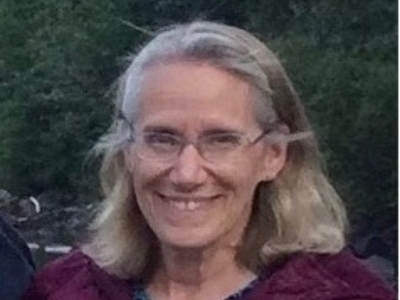
Patricia Heglund, Ph.D., began and ended her career with the U.S. Fish and Wildlife Service (USFWS), with notable stops along the way as affiliate faculty at the University of Idaho and as a branch chief with the U.S. Geological Survey. Throughout her career, Heglund kept one foot in academia and the other in management, from the local to the national level, often focusing on the National Wildlife Refuge System. Her research includes wildlife-habitat relations and studies of protected area systems, yielding more than 50 publications and an edited volume on species distribution modeling.
Heglund holds a B.S. in Wildlife from the University of Minnesota, and a M.S. and Ph.D. in Fisheries and Wildlife from the University of Missouri. She was the Society for Conservation Biology’s 2017 Edward T. LaRoe III Memorial Award winner for her innovative application of science to resource management. Heglund received the Science Excellence Award from the USFWS–Midwest Region and The Wildlife Society’s Midwest Chapter Professional of Merit Award. She also helped develop and teach in the decision analysis certification program and several other courses at the National Conservation Training Center.
An AOS Fellow (2011) and Elective Member (2005), Heglund served as Elective Councilor for both the Cooper Ornithological Society and the AOS, and contributed to the Research Grant and Publication Award committees. She most recently survived (her word) chairing the AOS Meeting Coordination and Scientific Program committees across several annual meetings. In retirement (also her word), she is a professional Nordic ski instructor (classic and skate) when she’s not out birding.
Marion Jenkinson Service Award
Nancy Chen, Ph.D., Assistant Professor, University of California, Los Angeles
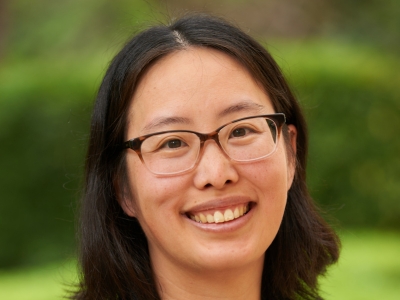
Nancy Chen, Ph.D., is an assistant professor in the Department of Ecology and Evolutionary Biology at the University of California, Los Angeles (UCLA). Her lab studies the evolution of natural populations on short timescales by generating and analyzing large-scale genomic datasets for multi-decade demographic studies with extensive pedigree data. Research in her lab aims to characterize the evolutionary processes shaping patterns of variation across the genome through space and time and to link genetic variation to variation in individual phenotypes, fitness, and population dynamics. Much of her work is focused on elucidating the consequences of habitat fragmentation and population decline in Florida Scrub-Jays (Aphelocoma coerulescens).
Chen received her A.B. from Harvard University and her Ph.D. from Cornell University. She was a postdoctoral fellow at the University of California, Davis, and was faculty at the University of Rochester before moving to UCLA. She previously received an AOS James G. Cooper Early Professional Award (2017), and an Alfred P. Sloan Research Fellowship (2019). Chen is an AOS Elective Member (2019), and is also deeply committed to promoting equity, diversity, and inclusion in science.
Follow Dr. Chen’s research: Chen Lab website
Dai Shizuka, Ph.D., Professor, University of Nebraska-Lincoln
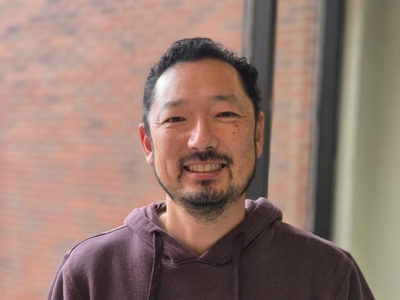
Dai Shizuka, Ph.D., is a professor in the School of Biological Sciences at the University of Nebraska-Lincoln (UNL). His research program explores the role of social behavior in animal ecology and evolution, and his work often integrates diverse topics such as network theory, cognition, life history theory, and species interactions. He has worked on the conflict between parents, offspring, and brood parasites in American Coots (Fulica americana), song recognition in Golden-crowned Sparrows (Zonotrichia atricapilla), long-term social network dynamics of winter social systems of migratory and non-migratory species, the evolution of sociality within and across species, and other topics.
Shizuka received his B.A. from Brown University and Ph.D. from University of California, Santa Cruz. He was a postdoctoral scholar at University of Wyoming and Chicago Fellows Postdoctoral Scholar at University of Chicago prior to joining the faculty at UNL and has held the Susan J. Rosowski Professorship since 2025.
Shizuka is an AOS Elective Member (2016) and AOS Fellow (2021), and a past recipient of an AOU Student Presentation Award (2010) as well as an AOU Travel Grant. He previously served as an AOS Elective Councilor and as co-chair of the AOS Diversity and Inclusion Committee. He was a co-principal investigator of the National Science Foundation (NSF) BIO-LEAPS grant that started the Flocks Project and continues to co-lead the initiative.
Follow Dr. Shizuka’s research: Google Scholar
Conservation Awards
The AOS Conservation Awards honor individuals or groups who have made exceptional contributions to conservation through applied research, on-the-ground conservation efforts, education, or partnership building. The Ralph W. Schreiber Conservation Award and the Conservation Practitioner Award recognize a broader range of critical conservation activities, from science to practice.
Ralph W. Schreiber Conservation Award
The AOS Ralph W. Schreiber Conservation Award honors extraordinary conservation-related scientific contributions by an individual or small team. Contributions from throughout the world and over any time period are eligible for this award, including applied research, restoration, and educational actions that conserve birds or preserve significant bird habitats; scientific examination of the principles of avian conservation and application of new insights into species restoration; and scientific evaluation, guidance, creation, and oversight of avian recovery programs or habitat reserve and restoration programs. The award is named for Ralph Schreiber, a prominent figure in American ornithology known for his enthusiasm, energy, and dedication to research and conservation, particularly of seabirds. The AOS is awarding the Ralph W. Schreiber Conservation Award in 2026 to Jeffery L. Larkin and Nils Warnock.
Jeffery L. Larkin, Ph.D., Distinguished Professor of Wildlife Ecology and Conservation, Indiana University of Pennsylvania
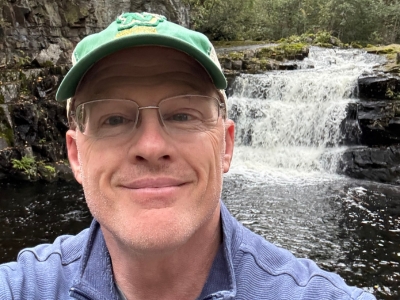
Jeffery L. Larkin, Ph.D., is a Distinguished Professor of Wildlife Ecology and Conservation at Indiana University of Pennsylvania. Since 2012, he has also served as American Bird Conservancy’s Forest Birds Habitat Advisor and the Natural Resources Conservation Service’s (NRCS) Working Lands for Wildlife-Golden-winged Warbler Science Advisor. His research combines his expertise in forestry, wildlife ecology, and conservation. Larkin, along with his students and collaborators, has assisted state and federal agencies and other conservation groups with understanding the ecology and associated management implications for numerous wildlife species.
Larkin received his B.A. in Biology from Ithaca College and his M.Sc. Forestry and Ph.D. in Animal Sciences from the University of Kentucky. He has authored or co-authored more than 170 scientific publications. In 2016, he received the USDA-Abraham Lincoln Award for his contributions to private lands conservation in partnership with NRCS’s Working Lands for Wildlife and, in 2019, was recognized by the Northeast Association of Fish and Wildlife Agencies for his efforts to bridge wildlife science and forest management. Larkin’s current research and conservation efforts focus on Dynamic Forest Restoration, a comprehensive approach to recover eastern forest birds through the implementation of conservation practices that improve within-stand and landscape structural complexity while addressing threats to forest resilience. This is Larkin’s first award from the AOS.
Nils Warnock, Ph.D., Director of Conservation Science, All Hands Ecology
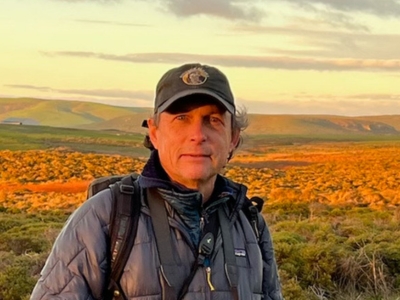
Nils Warnock, Ph.D., has dedicated his career to bridging science, applied conservation, and policy, with a long-standing focus on the movement ecology and conservation of shorebirds. His work has spanned the Pacific Basin, from New Zealand and Australia to Mexico and Alaska, where his globally collaborative research and pioneering tracking studies have advanced understanding of migratory bird populations and the habitats they depend on.
Over the course of his career, Warnock has held leadership roles at Point Blue Conservation Science as co-director of the Wetlands Program, at the National Audubon Society as the Alaska State Director, and most recently at All Hands Ecology as Director of Conservation Science. In these roles, he has consistently translated science into meaningful conservation action, contributing to the protection and stewardship of critical landscapes for birds and other wildlife from the Salton Sea to the Arctic Ocean. With a deep commitment to sharing the wonder of birds with others, Warnock has served on various boards including BirdNote and continues as a science advisor.
Warnock received a B.A. in Psychology from the University of Colorado, Boulder, and a joint Ph.D. in Ecology from San Diego State University and the University of California, Davis. He also served as an adjunct professor at Humboldt State University. He was twice awarded the U.S. Forest Service’s Taking Wing award. Warnock has been an AOS member since 1988, and is an AOS Elective Member (2007) and AOS Fellow (2018).
Conservation Practitioner Award
The AOS Conservation Practitioner Award recognizes individuals or groups of biologists at any stage of their career for outstanding work in government agencies (from municipal, state, provincial, federal, or international levels) or nongovernmental organizations to further the conservation of birds. This award acknowledges the planning, on-the-ground, or day-to-day work of dedicated professionals addressing avian conservation issues at a local or regional scale. The AOS is awarding two 2026 AOS Conservation Practitioner Awards, one to Janell Brush and one to Audrey DeRose-Wilson.
Janell Brush, M.S., Associate Research Scientist, Florida Fish and Wildlife Conservation Commission
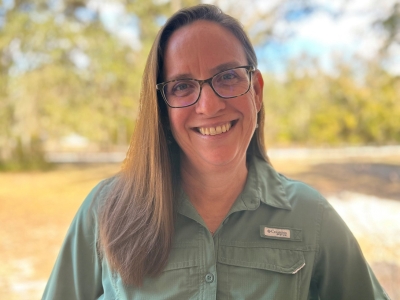
Janell Brush, M.S., is an associate research scientist with the Florida Fish and Wildlife Conservation Commission specializing in shorebird and seabird research. She secures funding and develops research projects to address data gaps and guide management actions aimed at recovering imperiled shorebird populations. Brush has contributed to the development of more than 20 scientific publications that have advanced species conservation and directed management and habitat restoration priorities. She actively contributes to regional and national shorebird conservation initiatives and species working groups, and leads the research and monitoring component of the Florida Shorebird Program, advancing science-based conservation efforts statewide. She works closely with Audrey DeRose-Wilson to co-lead the partnership between Audubon Florida and the Florida Fish and Wildlife Conservation Commission through the Florida Shorebird Alliance, coordinating statewide shorebird and seabird conservation efforts.
Brush earned her B.S. in Biological Sciences from the University of Nebraska–Lincoln in 1998 and her M.S. in Wildlife Ecology and Conservation from the University of Florida in 2006. Her work has been widely recognized: She received the Florida Cooperative Fish and Wildlife Research Unit Cooperator’s Award in 2012, and was part of the Gulf Avian Monitoring Network Team that earned the U.S. Fish and Wildlife Service Regional Director Honor Award for Conservation Partners. This award recognized the team’s development of the Strategic Bird Monitoring Guidelines for the Northern Gulf, a framework supporting bird population monitoring and restoration. In 2023, Brush received the Audubon Florida Guy Bradley Award for her exceptional dedication to protecting Florida’s shorebirds, seabirds, and their habitats. This is Brush’s first award from the AOS.
Audrey DeRose-Wilson, M.S., Director of Bird Conservation, Audubon Florida
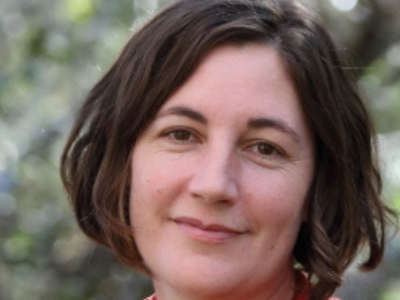
Audrey DeRose-Wilson, M.S., serves as Director of Bird Conservation at Audubon Florida, where she leads statewide efforts focused on bird conservation and policy. She oversees coastal bird and Florida Scrub-Jay (Aphelocoma coerulescens) conservation partnerships with agencies and organizations and directs grant-based fundraising with public and private foundations to support these programs. She works closely with Janell Brush to co-lead the partnership between Audubon Florida and the Florida Fish and Wildlife Conservation Commission through the Florida Shorebird Alliance, coordinating statewide shorebird and seabird conservation efforts.
Prior to joining Audubon Florida, DeRose-Wilson was the Florida Shorebird Program Lead at the Florida Fish & Wildlife Conservation Commission, where she also supervised regional nongame biologists. She previously worked with the Delaware Division of Fish and Wildlife as a shorebird biologist and Avian Program Manager, managing the volunteer-based Delaware Shorebird Project, using mark-recapture techniques to monitor the stopover population health of migratory shorebirds, including the federally threatened Red Knot (Calidris canutus). During this time, she represented Delaware on the Atlantic Flyway Council, Atlantic Coast Joint Venture, and multiple Association of Fish and Wildlife Agencies committees.
DeRose-Wilson holds an M.S. in Fish and Wildlife Conservation from Virginia Tech and a B.S. in Zoology from Michigan State University. Her graduate-level research at Virginia Tech focused on Wilson’s Plovers (Anarhynchus wilsonia) in North Carolina, examining their responses to aircraft and recreation. She has also conducted research as a scientist with Virginia Tech, studying post-storm population dynamics of Piping Plovers (Charadrius melodus). This is her first award from the AOS.
Publication Awards
Brina Kessel Award
The AOS Brina Kessel Award is given in even-numbered years and is presented to the author of an outstanding paper published in the two preceding years in the AOS journal Ornithology. The 2026 Brina Kessel Award is presented to Miguel Moreno-Palacios, lead author of the 2025 paper, “When do tropical birds breed? The case of Colombian species assemblages.”
Miguel Moreno-Palacios, Ph.D., Associate Professor, Universidad de Ibagué, Colombia
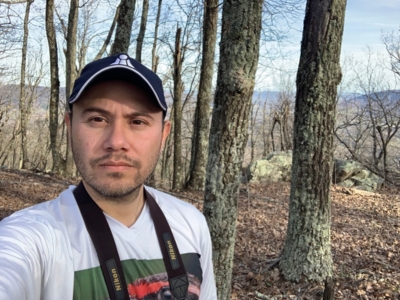
Miguel Moreno-Palacios, Ph.D., has served as president of the Colombian Ornithological Association since 2019 and is a member of the AOS, the Neotropical Ornithological Society, and the North American Banding Council as a certified bird bander and trainer. He is an associate professor at Universidad de Ibagué, where he serves as head of the Environmental Biology Program and researcher in the Integrative Biology Lab. His work focuses on the ecology and evolution of life-history cycles in Neotropical birds. His research integrates ecology, endocrinology, bioacoustics, and genetics to understand how mismatches in local conditions may promote asynchrony in breeding phenology and contribute to population differentiation in the tropical Andes.
Moreno-Palacios earned an M.Sc. in Biological Sciences from Universidad del Tolima and a Ph.D. in Biological Sciences from Universidad de los Andes, Colombia. He has received several academic awards and fellowships, including a scholarship from the Park Flight Migratory Bird Program of the U.S. National Park Service in 2008, the Doctoral Excellence Scholarship from the Colombian Ministry of Science in 2020, the François Vuilleumier Research Grant from the Neotropical Ornithological Society in 2022, a Research Grant from the School of Science at Universidad de los Andes in 2022, and the Fulbright Colombian Doctoral Research Fellowship, which supported his doctoral research stay at Virginia Tech in 2023.
Follow Dr. Moreno-Palacios’ research: Google Scholar
Abstract: Understanding when tropical birds breed is central to life-history theory and to predicting how species will respond to environmental change. Although early views emphasized the potential for year-round breeding in the tropics, growing evidence shows that reproductive activity in most tropical birds follows some degree of seasonality, often linked to rainfall and associated food pulses. However, broad-scale evaluations across ecological gradients remain scarce. Here, we investigated the breeding seasonality of Colombian resident birds using more than 80,000 records compiled from bird banding programs and the Global Biodiversity Information Facility (GBIF). These data included birds in breeding condition, active nests, nestlings, and adults showing reproductive behavior. We asked four main questions: (1) Do Colombian birds exhibit seasonal breeding activity? (2) Does the degree of seasonality vary with latitude and elevation? (3) Are there geographic differences in breeding patterns across Colombia’s biogeographic regions? and (4) How does breeding activity vary among feeding guilds? We used time-series analyses, circular statistics, and generalized additive models (GAMs) to evaluate breeding patterns at national and regional scales, incorporating geographic variables and trophic guild. We found a clear seasonal pattern in breeding activity, with a main peak in April and low but persistent activity throughout the year, especially in the Andes. Breeding was more synchronized at higher latitudes and more extended near the Equator. Elevation also shaped seasonality: lowland bird assemblages showed broader breeding seasons, whereas mid- and high-elevation assemblages had narrower seasonal windows, driven by a shift in the breeding peak toward mid-year in highland birds. Regional and trophic guild variation was also pronounced. Caribbean birds bred sharply in April, Andean birds showed prolonged reproductive activity with peaks in March and June, and Chocoan birds peaked in March followed by a decline. Breeding generally coincided with the onset of rains and avoided extremely dry or wet months. Feeding guilds also differed: frugivores-nectarivores, omnivores, and invertivores bred mainly early in the year, whereas granivores peaked mid-year. Together, these findings show that breeding activity in Colombia follows clear seasonal patterns shaped by rainfall regimes, elevation, and trophic ecology.
Citation:
Moreno-Palacios, M., D. Ocampo, M. A. Echeverry-Galvis, C. Gómez, G. A. Londoño, and C. D. Cadena (2025). When do tropical birds breed? The case of Colombian species assemblages. Ornithology 142:ukaf021.
Florence Merriam Bailey Award
The Florence Merriam Bailey Award recognizes an outstanding article published in Ornithology or in Ornithological Applications by an early-career AOS member. The 2026 recipient of the Florence Merriam Bailey Award is Fernando Machado-Stredel, lead author of the 2024 paper, “The roles of abiotic and biotic factors in driving range shifts: An invasive Pomacea snail facilitates Rostrhamus sociabilis (Snail Kite) northward range expansion,” which was published in the AOS journal Ornithology.
Fernando Machado-Stredel, Ph.D., Postdoc, University of New Mexico
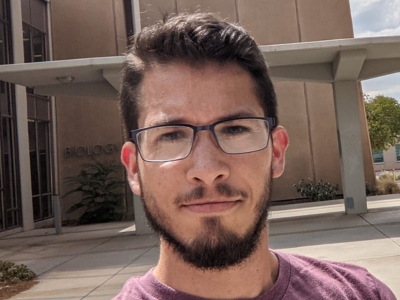
Fernando Machado-Stredel, Ph.D., is an evolutionary ecologist from Caracas, Venezuela, investigating the conditions and mechanisms that drive species’ persistence, dispersal, and evolution amid environmental change. Currently, he is a postdoctoral fellow in the Department of Biology at the University of New Mexico, working with Michael J. Andersen, Ph.D.
Machado-Stredel’s core research tests hypotheses of niche and range dynamics in avian radiations, integrating data from phylogenetics, population genetics, ecological niche modeling, natural history, and behavioral ecology across spatiotemporal scales. While deeply rooted in ornithology, his research spans other taxonomic groups, including extant and extinct mollusks, tropical arthropods, and other terrestrial vertebrates. He is passionate about teaching statistics, open access to knowledge, and developing tools and methods in biodiversity informatics, dispersal estimation, and phylogenetic niche conservatism.
Machado-Stredel earned a bachelor’s degree in Biology from Universidad Central de Venezuela and a Ph.D. in Ecology and Evolutionary Biology at the University of Kansas. A long-standing AOS member, his work has been recognized through student research, travel, and membership awards over the past decade. His past AOS awards include an AOS-sponsored Student Membership (2016), Travel Grants (2019; 2022), and an AOS Student Research Grant (2021).
Follow Dr. Machado-Stredel’s research: ORCID
Abstract: Rostrhamus sociabilis (Snail Kite) have recently expanded their range in Florida, tracking the invasion of a Pomacea snail (P. maculata), and exhibiting considerable changes in bill size and feeding niche. This range expansion is not aligned with changes in climatic conditions or the distribution of their historic prey (P. paludosa). The Eltonian Noise Hypothesis (ENH), which posits that interactive (biotic) factors have stronger effects on species’ distributions at local scales, predicts that noninteractive (abiotic) factors are generally more relevant at geographic extents. However, in this study, we explore the R. sociabilis range shift as a potential counterexample of the ENH. Under the biotic-abiotic-mobility framework (BAM), we explore the role of biotic and abiotic factors in the northward range expansion of this endangered species. Over the past 15 years, R. sociabilis have begun consuming the more-abundant invasive snails more often, while increasing in bill size, expanding ~175 km northward from previous range limits in the Kissimmee River Valley. We developed ecological niche models using 3 algorithms (Maxent, generalized linear model, ellipsoids) and found stability in climatic suitability between past and present models. Moreover, although native snails occur in northern Florida, R. sociabilis have had a historically patchy northern distribution due in part to the availability of appropriate wetland conditions. We found a strong latitudinal cline, with bill length increasing with latitude at least through 2020, suggesting that this morphological change broadened the species’ biotic suitable area and distributional potential. The interplay between changes in phenotype and biotic interactions has been poorly documented in distributional ecology, given a lack of rich occurrence datasets. Here, we highlight a case in which a biological invasion and subsequent changes in morphology and diet have facilitated the expansion of a specialized predator into areas that were unsuitable until recently.
Citation:
Machado-Stredel, F., P. J. Atauchi, C. Nuñez-Penichet, M. E. Cobos, L. Osorio-Olvera, A. Khalighifar, A. T. Peterson, and R. J. Fletcher Jr. (2024). The roles of abiotic and biotic factors in driving range shifts: An invasive Pomacea snail facilitates Rostrhamus sociabilis (Snail Kite) northward range expansion. Ornithology 141:ukae022.