Celebrating World Migratory Bird Day!
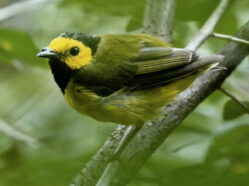
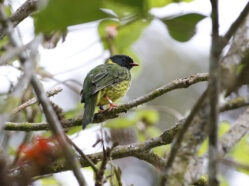
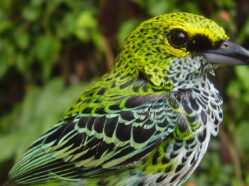
World Migratory Bird Day and Global Big Day are this Saturday, 8 May! We hope you’ll join us in this global celebration to raise awareness about the importance of conserving …

World Migratory Bird Day and Global Big Day are this Saturday, 8 May! We hope you’ll join us in this global celebration to raise awareness about the importance of conserving …

AOS is proud to recognize the students and postdoctoral researchers who have been awarded funding through our 2021 Student and Postdoctoral Research Awards program! These annual awards, each up to …
Chicago, IL, February 26, 2021 – After seven years serving as the first executive director of the American Ornithological Society (AOS), the leading international society for professionals dedicated to advancing …
By Ronald L. Mumme Linked paper: High-intensity flight feather molt and comparative molt ecology of warblers of eastern North America, by Ronald L. Mumme, Robert S. Mulvihill, David Norman, Ornithology. …
The AOS journals seek proposals for Special Features, collections of 5–8 articles that address emerging concepts or important questions of broad interest to ornithologists. AOS seeks to publish up to …
New research shows the glaring light in human-altered landscapes, such as livestock pastures and crop fields, can act as a barrier to big-eyed birds, potentially contributing to their decline.
By Catherine Lindell, Editor-in-Chief, The Condor: Ornithological Applications The editorial staff of The Condor: Ornithological Applications invites authors to consider the journal for their conservation social science papers that focus …
The American Ornithological Society (AOS) is especially proud to recognize and celebrate each of the reviewers of our scientific journals this week during Peer Review Week 2020. This year’s globally celebrated …
By Catherine A. Lindell and Kathryn P. Huyvaert Horned Screamers, Club-winged Manakins, and Bicolored Antbirds evoke specific memories to those who have seen these species and a great deal of …
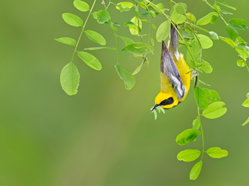
Wood warblers are among the most diverse and colorful songbirds in the Americas. Originally named “Lawrence’s” warblers, a hybrid type resembles Blue-winged warblers, but they have the distinctive black face mask and black throat patch that is unique to Golden-winged warblers.