Are Homebody Warblers More Likely to Sing Together?

Scientists who want to study the evolution of behavior face a fundamental problem: unlike bones, behavior generally doesn’t fossilize. However, that doesn’t mean that extinct species’ behavior doesn’t leave any evidence. The behavior of living or “extant” species can give us clues about the behavior of their ancestors, and we can use the behavior of living species, the evolutionary relationships among species, and computational modelling to make inferences about extinct species’ behavior.
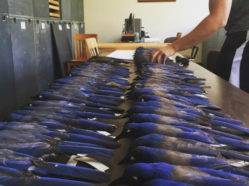
How Do Traits Change Across a Scrub-Jay Hybrid Zone?

Where should we draw the line between species? Biologists have debated this question for over 100 years. For much of that time, Ernst Mayr’s Biological Species Concept, which defines a species as a group of individuals that is reproductively isolated from other groups, has dominated the conversation. Recently, however, more and more evidence of hybridization between species has accumulated, especially in birds.

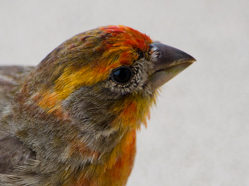
Tracking Cultural Evolution in House Finch Song, Part 1

The first bird song I ever recorded was that of a House Finch. When I was a kid growing up in Leominster, Massachusetts, the bird that nested behind my front porch lamp would fly out to a particular birch tree or the telephone wire and belt out a complex four-second warble over and over again.

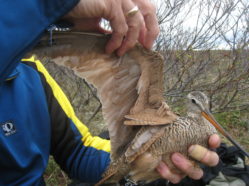
How to Hide a Godwit

Marbled Godwits are common and conspicuous North American shorebirds. On its prairie breeding grounds, the godwit’s raucous call and proud flight display alerts all to its presence, and the species is equally obvious on its temperate nonbreeding grounds along both the Atlantic and Pacific coasts due to its gregarious nature and telltale alarm call. So how did such a charismatic species go largely undetected in Alaska until the 1980s?

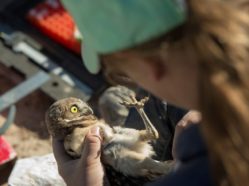
Do Burrowing Owls Disperse Plague-Infected Fleas?

Western Burrowing Owls (Athene cunicularia hypugaea) and Pulex irritans, the so-called human flea, have a curious host-parasite relationship. Although we’ve known about it for some time, many details of their connection remain unclear, including why it appears mainly in the northwestern portion of the Burrowing Owl’s range despite the fact that both species have much broader geographic distributions.

The Auk’s Auk

On the first of August 1883, three young members of the tiny [1] Nuttall Ornithological Club (NOC) of Cambridge, Massachusetts—the President (William Brewster), as well as the Editor (Joel Asaph …