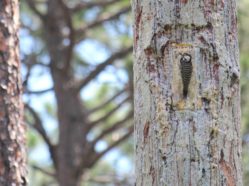
Red-Cockaded Woodpecker Nesting Season Meets Climate Change
Early in their ecology classes, students learn that plants and animals facing a changing climate have three options: adapt, move, or die.
Early in their ecology classes, students learn that plants and animals facing a changing climate have three options: adapt, move, or die.
Reproduction and migration are the two most demanding tasks in a bird’s life, and the vast majority of species separate them into different times of the year.
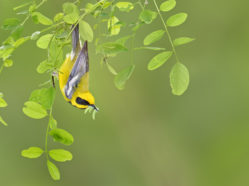
Few groups of organisms possess striking visual displays that rival the bright colors and intricate patterns of bird feathers.
The American Ornithological Society (AOS) is honored to announce that we are accepting applications for the new Kessel Research Fellowship Program.
In the first two years of my PhD I applied for a slew of small grants and was roundly rejected from every single one. Multiple times.
There’s no shortage of studies demonstrating that conditions during one part of birds’ annual of breeding and migration cycle can affect individuals in subsequent stages — a phenomenon known as carry-over effects.
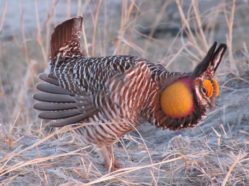
Imagine living in a grassland landscape with an almost constant low-frequency hum from spinning wind turbine blades. The humming is distracting, so what do you do?
To understand the impact of restoration efforts, one of the things we can do is study the wildlife that lives in these human-restored habitats.
We usually think of a species as being reproductively isolated – that is, not mating with other species in the wild. Occasionally, however, closely related species do interbreed. New research …
Affectionately known to some as the “green-headed monster,” the Mallard is one of the world’s most recognizable species of waterfowl.