Chasing Evolutionary Processes in Andean Coeligena Hummingbirds
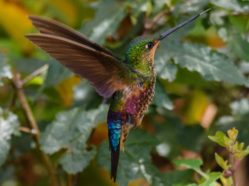
I am lucky that one of the species of hummingbird I study, the Blue-throated Starfrontlet (Coeligena helianthea), occurs on my university’s campus in the mountains of Bogotá, Colombia.
Have you ever looked up at a mountaintop in the distance and wondered what birds might be living there? When mixed-species flocking fanatics like ourselves see that mountain, another set of questions catches our imagination.
Animals that do well in urban areas tend to be the ones that learn to make use of resources such as the food humans throw away. But is our food actually good for them? A new study published in The Condor: Ornithological Applications suggests that a diet of human foods such as discarded cheeseburgers might …
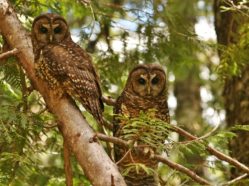
When the Northern Spotted Owl was protected under the Endangered Species Act in 1990, the primary threat to the species was the loss of the old-growth forest it depends on. However, new research published in The Condor: Ornithological Applications shows that the Northern Spotted Owl population in Washington’s Mount Rainier National Park has declined sharply in the …
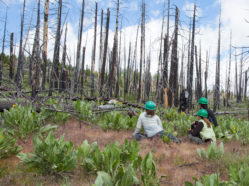
It’s fire season again in northern California. In some parts of the state, the evenings will glow with those too-familiar burnt orange sunsets while residents keep a wary eye on the news.
The beach: the sun, the sand, the water. It’s a wonderful place to be in the summer, whether you’re a shorebird or a human.
One of the daily joys of summer is waking to the sounds of bird song. Those early morning bursts of singing herald the start of our days, for birds and people alike. If we listen carefully, though, the dawn chorus also reveals something about the state of nature.
Many shorebirds migrate across continents and oceans, relying on key areas to rest, eat, and refuel. Habitat loss, climate change, and other factors are affecting these birds at their breeding, migration, and wintering grounds.
For bird aficionados, waking up on Guam can be a surreal experience. The soundscape is nearly devoid of birdsong other than the clucking of chickens and the occasional chirp of a Eurasian Tree Sparrow. Guam’s silent forests are the work of the brown treesnake, an invasive predator that was accidentally introduced to the island after World War II.
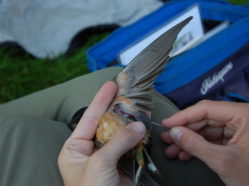
Many of North America’s migratory songbirds, which undertake awe-inspiring journeys twice a year, are declining at alarming rates. For conservation efforts to succeed, wildlife managers need to know where they go and what challenges they face during their annual migration to Latin America and back. For a new study published by The Condor: Ornithological Applications, researchers …